★★★★★
Martin Malý — 17.04.2026
Reliable company with good communication and solid service.


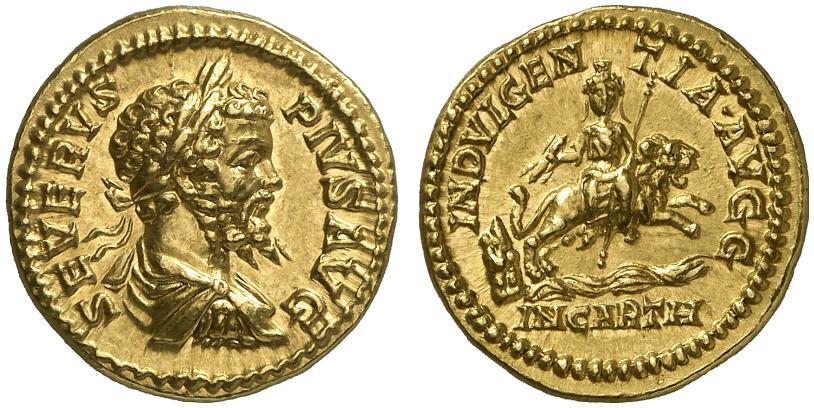
Gold Aureus (AV), 204 AD, Rome
Weight: 7.24 g
Obverse: Draped bust of the emperor facing right, wearing a laurel wreath.
Reverse: The goddess Dea Caelestis riding a lion to the right, holding a thunderbolt and scepter; water flows from a rock beneath.
References: BMC; Calicó 2463 (this coin); Biaggi 1072 (this coin).
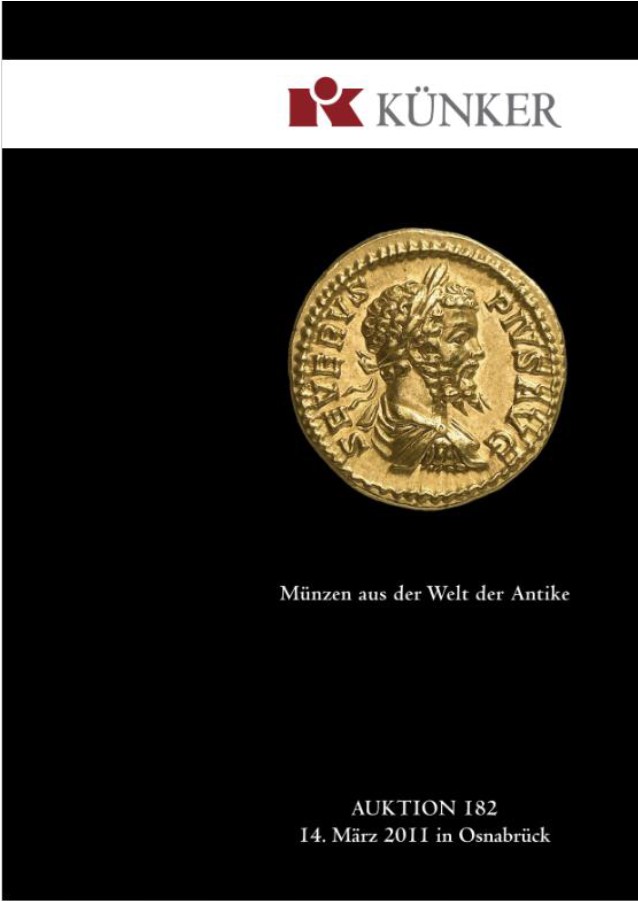
Provenance: Ex. Künker Auction 182 (March 14, 2011), lot 772 – cover coin; Ex. NAC Auction 34 (November 24, 2006), lot 40.
Condition: Extraordinary specimen – RR (Very Rare); "Extremely Fine / Mint State" (EF–MS).
The reverse legend expresses the Emperor’s connection to the capital of his native province of Africa – Carthage.
Likely related to the construction of the Carthaginian aqueduct.
In 204 AD, Emperor Septimius Severus and his son Caracalla visited Africa.
This extraordinary gold aureus of Emperor Septimius Severus represents a unique investment opportunity. Its value is driven by a combination of high historical importance, extreme rarity (RR), and a superb state of preservation approaching Mint State. The attractive iconographic motif of Dea Caelestis on a lion symbolizes the imperial link to Carthage, fueling strong collector demand.
The distinction of this specific specimen is further cemented by its publication in the standard reference Calicó and its selection as the cover coin for the Künker auction catalogue. With only four known examples of this type recorded in available numismatic databases, this piece is considered the finest known specimen. Furthermore, its documented provenance from major auctions (Künker and NAC) significantly enhances its prestige, traceability, and long-term investment potential.
If interested, please contact us at
info@numfil.com
信任、保密和个性化服务是收藏品投资成功的基石。
Reliable company with good communication and solid service.
我们与客户的沟通将以绝对的谨慎和有所担保为基础。
联系我们, 我们会尽快回答客户的疑问。